Cork, the forgotten hero of sustainability?
The revival of mid-century and 1970’s interior design styles has brought about a renaissance in the use of materials like lino, chrome and velvet. Maybe unbelievably to some (particularly those with lived experience of cork-frenzied interiors of the mid-century) Cork is also back!
But unlike cork's mid-century's uses, which seemed to only apply to floors, walls, ceiling and Babycham bottles; the uses for cork today seems inexhaustive; with all its applications, the cork renaissance could be at the fore of a revolution in sustainable building.
The material is being favoured by both construction and architectural design industries. Cork's comeback isn't so much of a surprise when one learns about this retro material's characteristics, its wealth of applications and most importantly how sustainable the production of cork is. Cork is low VOC, fire retardant, infinitely recyclable, antimicrobial, pest resistant and quite thermally effective for a natural material (thermal conductivity of 0.04 to 0.05 watts per square metre (1).
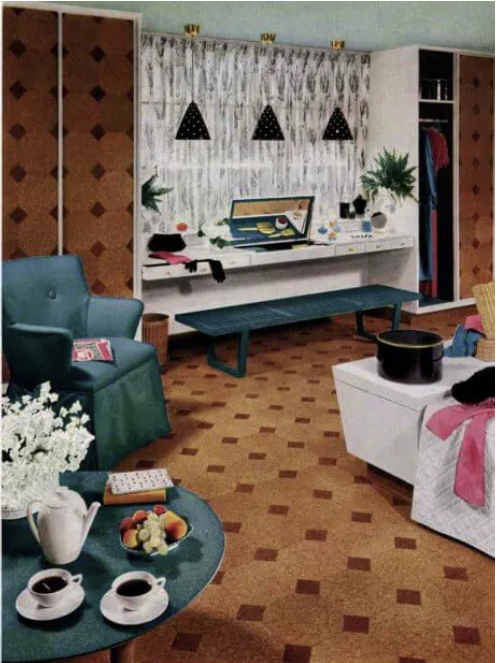

Sustainable, Sequestering, Co2 neutral, zero waste production
Once the oak has reached maturity (at around 25 years), the bark is expertly stripped, exposing a beautiful phloem ring of burnt ochre. With the tree living for an average of 200 years its bark can be harvested about 15 times over its lifetime.
After harvesting the oak rapidly regrows a protective bark; during this process Co2 is sequestered (1). Incredibly, one tonne of cork production removes 73 tonnes of Co2 from the atmosphere (2). Fabulously there is zero waste in the harvesting of cork as even cork dust is used as a biofuel to power the processing of material(3).
A circular construction material
Aside from its wide range of properties, cork can also be recycled and repurposed. The reuse/recyclability of cork aligns with the movement in architecture and engineering towards ‘’design for disassembly’’(does what it says on the tin) and ‘’vernacular design’’, which uses local materials to lower carbon footprint.
Designing for disassembly and vernacular design aren't new concepts; Our palaeolithic ancestors were experts at erecting and disassembling dwellings made solely from local materials; Cork fits both of these movements, due to its recyclability, sustainably and its availability across central and Southern Europe, Central and South America and Northern Africa.
Modern examples of cork in interiors and architecture
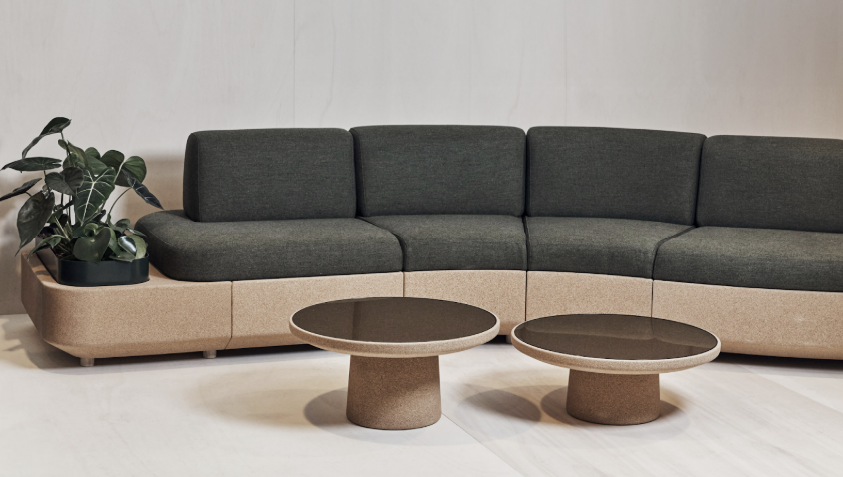
At Clerkenwell design week 2024, Designer Paul Crofts and furniture brand Isomi showcased their Tejo sofa system. The system uses cork for the base and backrest, which makes up the lionshare of any sofa, which is usually built in plywood or metal. Recycled latex is wrapped in wool wadding, removing the need for high VOC and petrochemical based polyurethane foam.
Unlike its predecessors, this sofa will never end up in landfill as all its elements are recyclables.
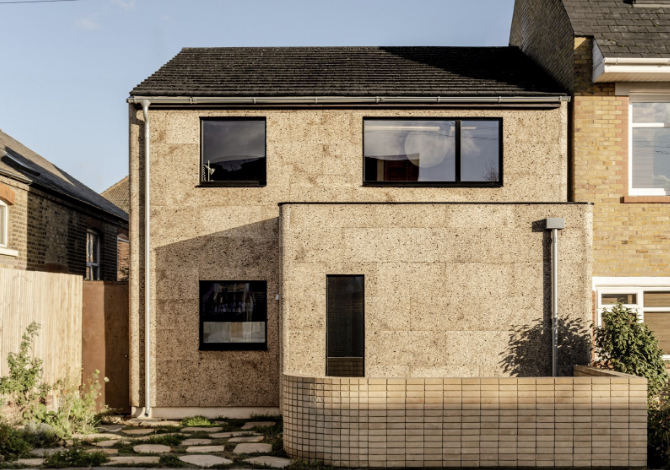
In London ROAR Architects and Nina+Co have fully clad a home in cork cladding. Cork was chosen because of its thermal properties and sustainability. Practicalities aside, the finish is so eyecatching, tactile and inviting. The cork cladding is expected to last up to 25 years, and beyond that, a lime render can be applied over the top to refresh the appearance and seal it.
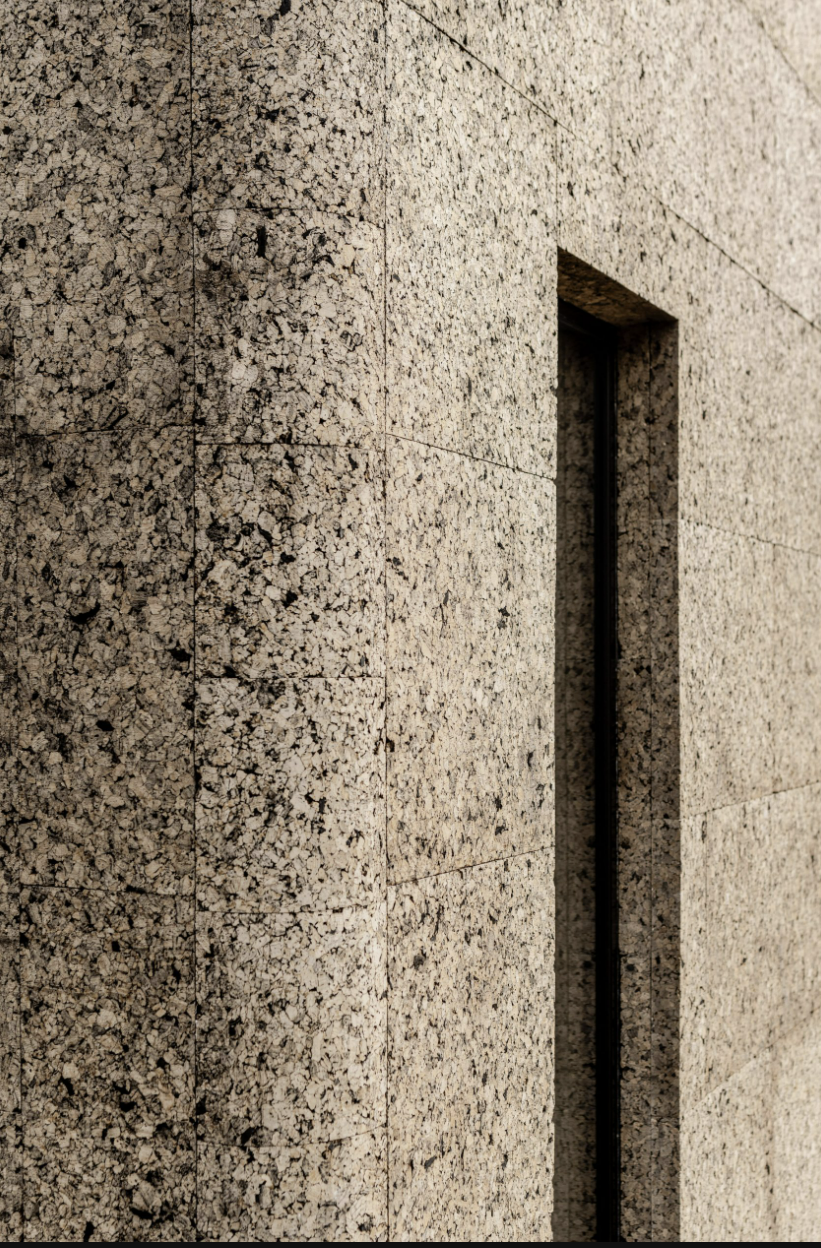
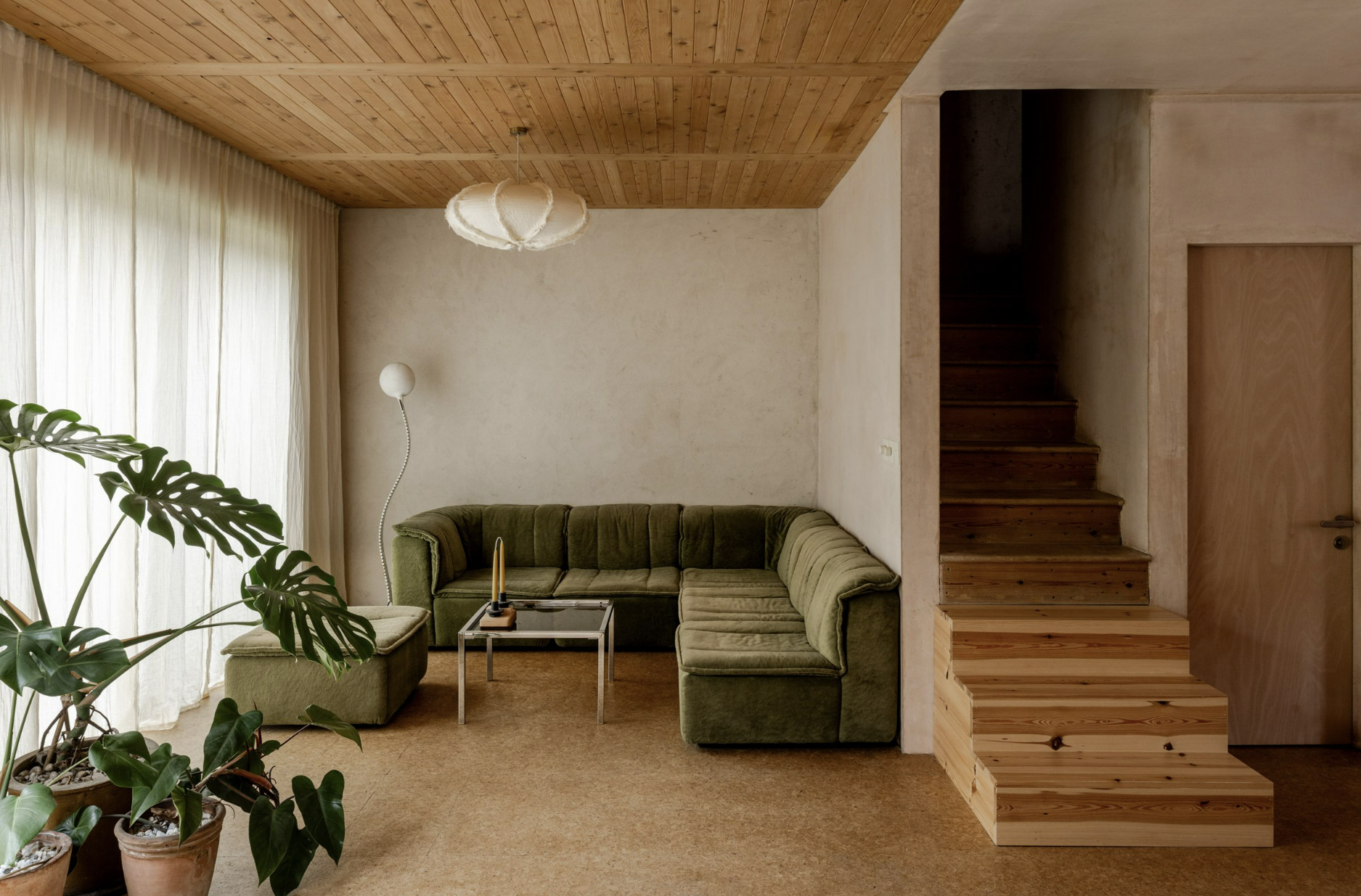
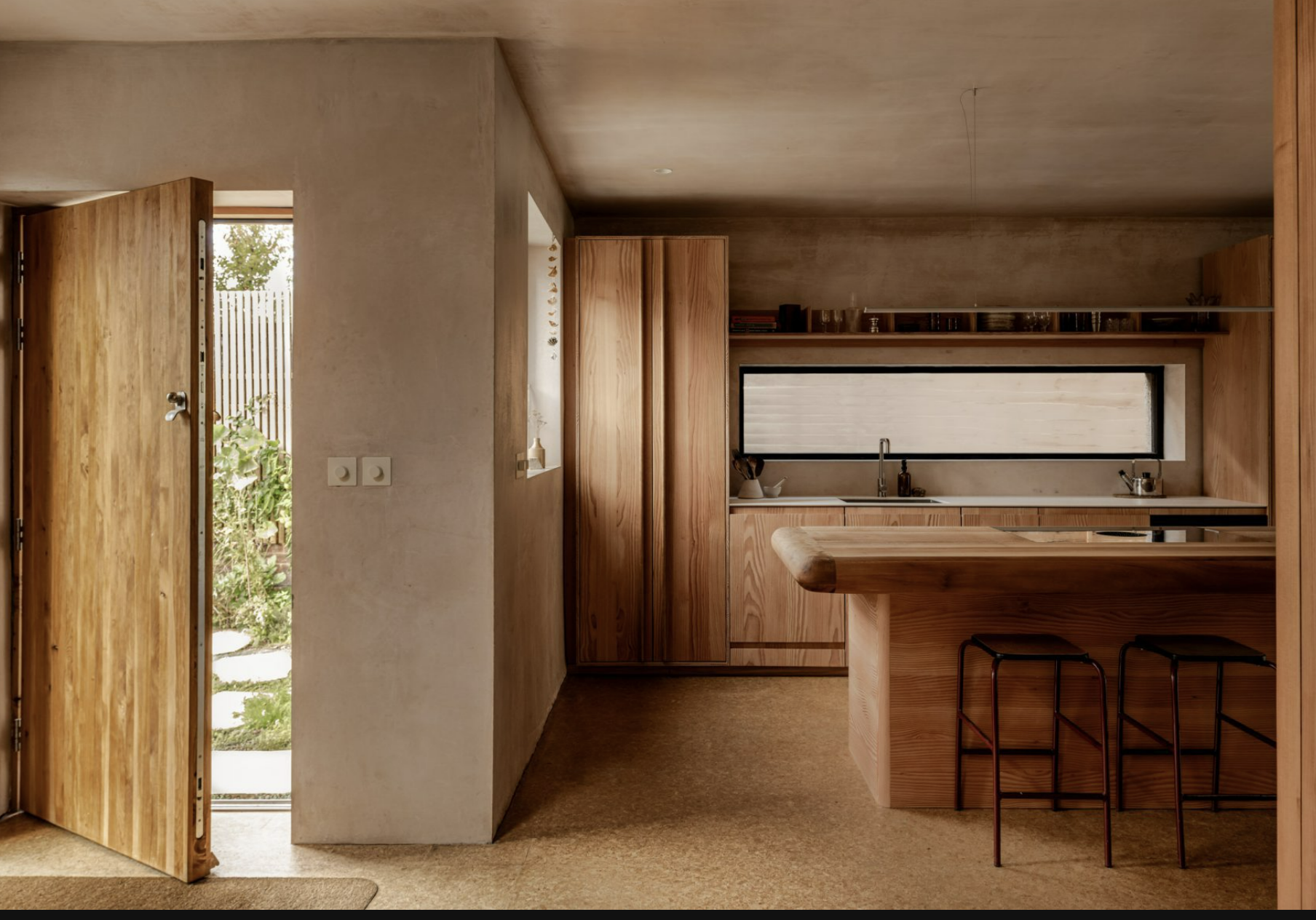
Cork plaster is a breathable finish made from finely ground raw cork which is often mixed in with lime. Its use can be for both interior and exterior. Cork plaster is known to enhance insulation, regulate humidity and support healthy indoor air quality. It is also moisture resistant and offers acoustic insulation. The plaster Can be applied as a textured finish or skimmed over for a seamless, invisible look. Unlike traditional plasters it can be applied very thinly (around 6-8mm).
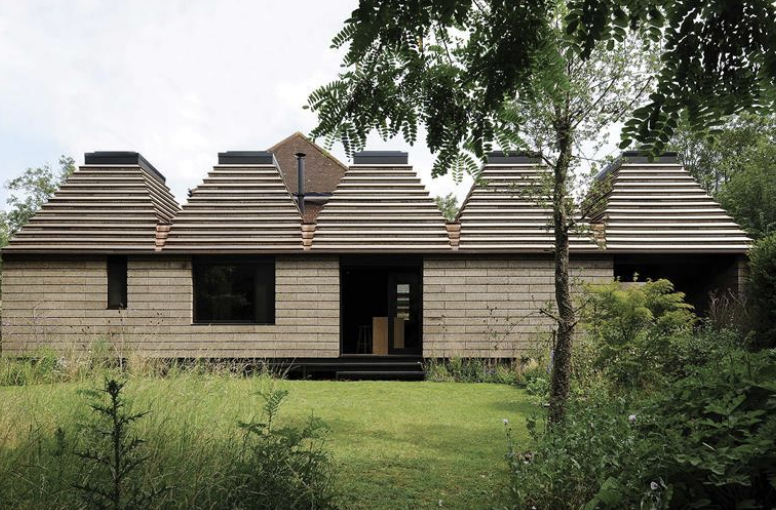
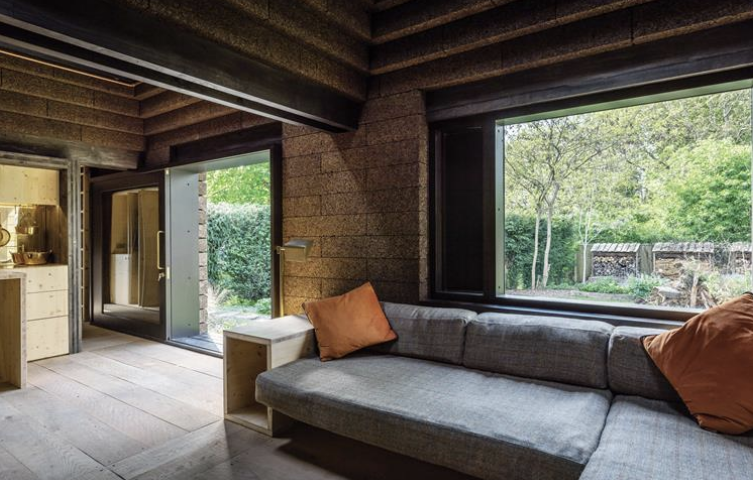
This home in Eaton, by Matthew Barnett Howland with Dido Milne and Oliver, is built using expandable cork blocks atop a crosslam floorplate. This mortar free construction uses cnc machined interlocking blocks that are dry-assembled. Expanded cork is produced from lower-grade cork material that would otherwise be a secondary output of cork forestry. The cork is processed as granules that are heated with steam. This heating releases suberin, a naturally occurring waxy compound within the cork, which binds the material together without added high VOC adhesives.
Although building homes and offices from cork blocks is in its infancy, there is a wealth of research that proves what a futureproof material it is. I think the zenith of uses is yet to come. For my interior design practice at least, I will be keeping cork at the fore, particularly in spaces that need acoustic relief and extra insulation. And although I am sure cork will evoke a strong, and sometimes negative response in some, I think it is a beautiful material aesthetically; seldom is a material both beautiful, circular, sustainable and multifaceted. Ultimately, its corks sustainability in both production and lifespan is what makes it such a hero; hopefully not a forgotten hero, but one for the future.
Sources
1How cork production sequesters CO2 corklink
2 Cork: a strategic material Luís Gil*
3. The University of Lisbon Centro de Estudos Florestais do Instituto Superior de Agronomia (ISA)
Image credits:
1. Armstrong's floors and walls 1950 edition.
2. Cork forest Jamie Gibb
3. Tejo sofa system. Dezeen
4. ROAR Architects and Nina+Co
5. Matthew Barnett Howland with Dido Milne and Oliver Wilton